


 Tiếng Việt
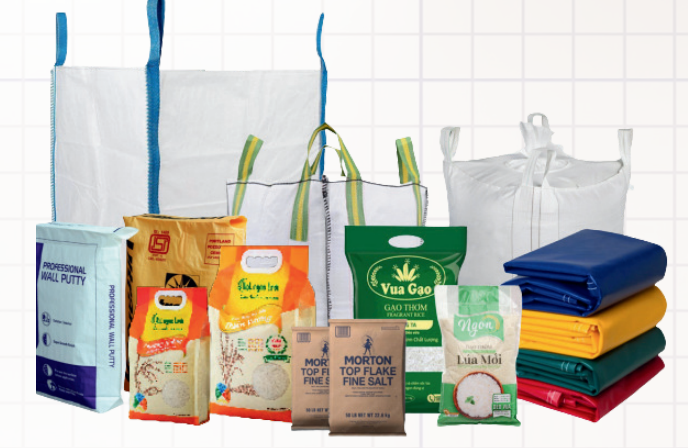
1. The Crucial Role of Industrial Packaging in the Rice Supply Chain
Milled rice naturally lacks its outer protective husk, exposing its starch structure directly to atmospheric factors. Because rice grains are highly hygroscopic, adverse ambient moisture, high temperature, storage pests, and natural oxidation can easily lead to breakage, aroma loss, mold development, or aflatoxin contamination.
In modern global trade, industrial packaging serves as a critical engineered barrier throughout international logistics:
- Preserving Grain Integrity: Controls moisture exchange, keeping grain moisture content within the standard export range of 14% to 14.5% during long journeys.
- Resisting Multi-Tier Handling: Prevents tearing, punctures, and burst seams during mechanical handling, rough palletization, and long-haul shipping.
- Enhancing Brand Perception: High-definition printing delivers immediate visual appeal on retail shelves, turning functional packaging into an effective brand asset.
- Meeting International Compliance: Satisfies strict food-contact migration directives across key markets such as the United States, the European Union, Canada, and the Middle East.
2. Common Types of Rice Packaging Bags
Industrial rice packaging covers various structures engineered for domestic distribution, bulk storage, automated retail, or intercontinental shipping.
2.1. Single-Layer PP Woven Bags (Single Woven PP Bags)
- Material Composition: Extruded from 100% virgin polypropylene (PP) granules and woven circularly into tubular fabric sleeves. The surface can remain unlaminated or receive a thin coating to minimize loose weave gaps.
- Mechanical Characteristics: High tensile strength, tear resistance, and natural breathability that dissipates residual heat from freshly milled grain. It is the most economical woven bag option available.
- Printing Method: Primarily basic Flexographic printing (1 to 3 colors).
- Typical Applications: Mill-to-silo transit, internal storage, wholesale distribution at local commodity hubs, and standard bulk transport.
2.2. BOPP Laminated PP Woven Bags
- Three-Layer Architecture:
- Inner Woven Polypropylene: Provides structural tensile load-bearing capacity.
- Extrusion Bonding Layer: Bonds the outer film to the base woven substrate while sealing weave interstices against moisture.
- Outer BOPP Film (Biaxially Oriented Polypropylene): Supports photorealistic gravure printing with a choice of glossy or matte finish.
- Key Advantages:
- Delivers high-definition gravure printing (up to 8–9 colors) for sharp branding and photographic visuals.
- Creates an external barrier against dirt and water ingress while locking in grain aroma.
- Features side-gusseting options that allow filled bags to form a neat, freestanding rectangular profile on retail shelves.
- Typical Applications: Premium branded retail rice (e.g., ST25, Jasmine, organic long-grain) distributed through supermarkets and international retail channels.
2.3. Kraft Paper Laminated PP Woven Bags
- Material Composition: Combines a virgin PP woven base with outer virgin or bleached Kraft paper via an extrusion bonding layer.
- Mechanical Characteristics: The Kraft layer provides light surface moisture absorption and puncture resistance, while the woven backing prevents burst failures on impact. Its natural texture also offers an organic, traditional look.
- Printing Method: Flexographic printing with sharp 1- to 4-color designs.
- Typical Applications: Certified organic rice, specialty heritage grains, and artisanal rice brands packed in 5kg, 10kg, or 25kg sizes.
2.4. PP Woven Bags with Internal PE Liners
- Material Composition: A two-part system comprising a heavy-duty outer woven PP shell and an independent inner polyethylene (LDPE/LLDPE) liner of customizable gauge.
- Mechanical Characteristics:
- The heat-sealed bottom of the PE liner provides an airtight, moisture-proof barrier against humid air and ocean condensation.
- Prevents fine rice bran dust from leaking through the woven structure.
- The liner can be loosely inserted or stitched at the bottom seam, allowing manual tying or heat sealing before closing the outer bag.
- Typical Applications: Ocean container freight with transit times of 30 to 60 days, especially through humid or fluctuating climates.
2.5. PA/PE Vacuum Barrier Pouches
- Material Composition: Co-extruded multi-layer barrier films combining Polyamide (PA for puncture resistance and gas barrier) with Polyethylene (PE for hermetic heat sealing).
- Mechanical Characteristics:
- Allows thorough evacuation of internal oxygen to establish an anaerobic environment.
- Inhibits weevil hatching and mold growth, extending shelf life to 12–24 months without chemical fumigants.
- High transparency forms a firm, brick-like shape when packed in forming molds.
- Typical Applications: Gift packaging, specialty brown rice, and premium consumer retail packs (1kg, 2kg, and 5kg).
3. Standard Technical Specifications & Dimensions
The following sizing reference covers standard industrial packaging norms for rice handling:
| Capacity | Standard Dimensions (W×L) | Side Gusset Width | Recommended Structure | Finishing Options |
| 5 kg | 30cm x 50cm | 5cm x 6cm | BOPP Laminated PP / PA/PE Barrier Film | Die-cut oval handle, clear viewing window |
| 10 kg | 40cm x 60cm | 6cm x 8cm | BOPP Laminated PP / PP with PE Liner | Rigid plastic handle, folded hemmed bottom |
| 25 kg | 50cm x 0cm | Optional flat/gusseted | BOPP Laminated PP / Kraft Laminated PP | Heat-cut top edge, heavy-duty chain stitching |
| 50 kg | 58cm x 93cm$ or 60cm x 0cm | Flat (no gusset) | Single PP Woven / Coated Anti-Moisture PP | Double-folded bottom with twin needle chain stitch |
(Note: Final bag volume varies slightly depending on grain length, chalkiness percentage, broken ratio, and filling density. LUA PACKING manufactures tailored dimensions to match specific customer filling profiles).
4. Key Factors for Cost and Performance Optimization
Selecting the right packaging requires balancing budget limits against the commercial risk of cargo damage. Five core technical parameters should guide this decision:
4.1. Fabric Weight (GSM) and Mechanical Safety
Fabric areal density (grams per square meter – $\text{g/m}^2$) directly dictates tensile resistance and stackability under warehouse conditions. For 50kg bags stacked 10 to 12 layers high, fabric weight should range between $75\text{ g/m}^2$ and $85\text{ g/m}^2$. The bottom fold should measure 25mm to 30mm with heavy-duty multi-ply polyester thread to eliminate drop rupture.
4.2. Moisture Barrier & Protection Against Container Sweat
For ocean transit across warm and cold zones, severe temperature swings inside shipping containers create condensation (“container rain”). Under these conditions, an extrusion-coated shell or an inner PE liner is essential to prevent moisture penetration and preserve dry grain consistency.
4.3. Food-Grade Safety and Migration Compliance
Because rice grains contact the innermost layer of the packaging, converters must use 100% virgin polymer resin. Processing aids, masterbatches, and printing solvents must comply with food-contact regulations, remaining free of heavy metals, phthalate plasticizers, and offensive chemical odors.
4.4. Branding and Print Precision
- Commodity markets: Simple flexographic print lines reduce upfront plate costs.
- Modern supermarket retail: BOPP rotogravure printing provides photorealistic graphics. Including an unprinted clear window allows shoppers to inspect grain quality and translucency directly.
4.5. Minimum Order Quantities (MOQ) and Inventory Turnover
Automated circular weaving, extrusion coating, and gravure conversion require minimum machine-run thresholds. Aligning procurement volumes with realistic seasonal milling schedules helps secure wholesale scale pricing without tying up working capital in idle bag inventory.
5. Why Partner with LUA PACKING for Industrial Packaging?
LUA PACKING delivers comprehensive industrial packaging solutions, serving agricultural processors, wholesale distributors, and exporters.
- International Quality Standards: Manufacturing partner facilities are audited and certified to ISO 9001:2015, ISO 14001, BRCGS Packaging Materials (Global Standard for Packaging Materials), and Kosher requirements.
- Tailored Technical Configurations: Customization across virgin PP woven fabrics, matte/gloss BOPP film lamination, multi-ply Kraft paper, and loose or attached PE liners.
- Precision Rotogravure Conversion: High-precision gravure cylinders and dependable ink adhesion deliver clear, consistent brand graphics, supported by professional 3D packaging mockups prior to production.
- Integrated Logistics Capabilities: Experienced in international trade terms (FOB, CIF), LUA PACKING coordinates transit schedules and maintains regional hubs to ensure reliable container deliveries through peak seasonal harvests.
For technical specifications, tailored samples, or volume production quotes on industrial rice packaging, contact our technical team or visit our official website at luapacking.com.